


Modern Beard Styles for Professionals: 2026 Guide
Table of Contents
Why Modern Beard Styles for Professionals Matter in 2026
Corporate Beard Styles That Pass the Dress Code Test
The Short Boxed Beard
The Tapered Beard and Low Fade
The Beardstache and Stubble
Beard Styles by Face Shape: Match the Jawline You Have
Round Face
Square Jaw
Oval Face
Long or Narrow Face
Heart-Shaped Face
The Growth-Pattern Check
Communicating the Shape to a Barber
How to Trim a Beard Neckline Without Ruining the Line
Find the Neckline, Then Commit
Cheek Lines and Symmetry
The Three Month Beard Rule: What It Actually Tells You
Choosing a Professional Beard Style for Your Workplace
Industry Norms: A Practical Breakdown
Remote-Work Video Calls: The On-Camera Checklist
Patchy Growth, Sensitive Skin, and Uneven Density
A Quick Decision Guide
Maintenance Routines for Busy Professionals
Frequently Asked Questions
Last Updated: October 18, 2026
Why Modern Beard Styles for Professionals Matter in 2026
A beard is no longer a workplace liability, it signals self-management. The difference between "sharp" and "unfinished" comes down to length discipline, clean lines, and a maintenance routine you keep.
Below: the styles that pass the dress code test, how to match a shape to your jawline, trimming rules that keep a beard deliberate, and the three month beard rule.
Key Takeaway A professional beard is not judged by its length. It is judged by whether the cheek line, neckline, and density look intentional. Get those three right and almost any length reads as professional.
Corporate Beard Styles That Pass the Dress Code Test
Corporate beard styles share one trait: they look controlled. A short boxed beard, a tapered beard with a low fade, and a well-edged beardstache fit most professional environments because the outline is clean and the length is predictable.

The Short Boxed Beard
The short boxed beard is the safest professional option: close-cropped on the cheeks and jaw, connected to the mustache, with defined edges. Clubman's style guide names it a clean, controlled, modern look, and that matches what we see in the chair, geometric shape, uniform length, and it photographs well.
The Tapered Beard and Low Fade
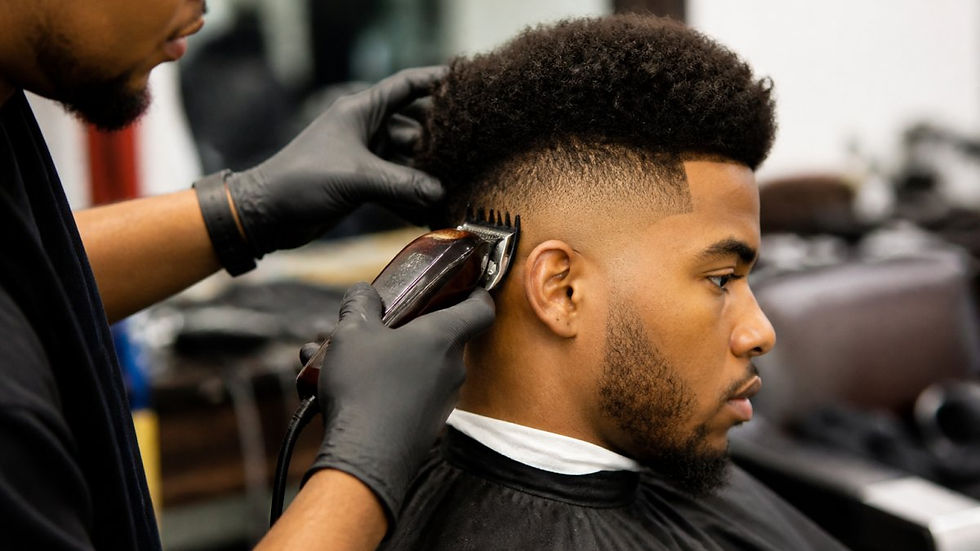
The tapered beard pairs a longer chin with shorter sides, and a low fade blends the sideburn into the hairline. The appeal is contrast: chin length draws the eye down while faded sides keep the silhouette sharp.
The Beardstache and Stubble
The beardstache is a fuller mustache with light stubble on the cheeks and jaw. Stubble alone is the lowest-maintenance professional option but needs a defined neckline or it reads as neglect. Both suit casual offices.
Style | Length | Maintenance | Best For |
Short boxed beard | 1-2 cm | Weekly edge-up | Conservative offices |
Tapered beard + low fade | 2-4 cm at chin | Barber every 2-3 weeks | Client-facing roles |
Beardstache | Stubble + full mustache | Weekly trim | Creative and casual offices |
Stubble | 3-5 mm | Neckline every few days | Remote and hybrid work |
Beard Styles by Face Shape: Match the Jawline You Have
Beard styles by face shape are about visual balance, not rigid rules: add weight where your face is narrow, remove it where it is wide. Use the guidance below as a starting point, then adjust for growth pattern and workplace.
Real Men Real Style
Round Face
Keep the sides short and let the chin grow slightly longer. A tapered beard adds vertical length at the chin while tight sides prevent width at the widest part of the face. Avoid a full, rounded beard that mirrors the face shape, it exaggerates roundness. A short boxed beard with a slightly longer chin and a clean neckline is the safest professional option.
Square Jaw
A short boxed beard follows the natural angles and looks intentional. Avoid heavy side growth, which squares the face further and can read as aggressive in conservative offices. Keep the cheek line low and natural so the jaw angle shows. If your jaw is very strong, a beardstache or light stubble softens the lower face without hiding the structure.
Oval Face
Most lengths work, so choose based on workplace and maintenance tolerance rather than bone structure. Oval faces carry a short boxed beard, tapered beard, or fuller medium beard without correction; the limiting factor is usually growth density and time spent on edges.
Long or Narrow Face
Keep length modest and let the sides fill in. A full beard with short chin length adds width at the cheeks and jaw. Avoid a long, pointed chin beard, which lengthens the face further. If your sides grow slowly, a shorter style with a strong neckline beats a full beard that never fills in.
Heart-Shaped Face
A beardstache or short beard with fuller cheeks softens a wide forehead and narrow chin. Add visual weight at the jaw and lower cheeks so the chin does not look pointed, and avoid too much chin length, which sharpens the lower face.
The Growth-Pattern Check
A common mistake is asking for a style by name without accounting for growth pattern. Patchy cheeks will not be fixed by a full beard; a shorter style with a strong neckline will. Grow six to eight weeks, then check density on cheeks, jaw, and chin separately: sparse cheeks with a strong chin and mustache favor a beardstache or short boxed beard, dense sides with a thin chin favor a tapered beard with more chin length, and even but slow growth favors a shorter style maintained weekly.
Pro Tip Take a straight-on photo of your face after two weeks of growth and again after six weeks. Comparing the two shows which areas fill in and which stay patchy, which is more reliable than judging in the mirror.
Communicating the Shape to a Barber
Face-shape advice only works if you can translate it into instructions. Instead of naming a style, describe the correction you want: "keep the sides tight, leave a little more length at the chin," or "keep the cheek line natural and the neckline just above the Adam's apple." A barber maps that to your growth pattern faster than a style name.
How to Trim a Beard Neckline Without Ruining the Line
How to trim a beard neckline comes down to one rule: find the line once, then maintain it. It should sit just above the Adam's apple, following the curve of the jaw rather than a straight horizontal. Too high looks like a chinstrap; too low looks unkempt.
Find the Neckline, Then Commit
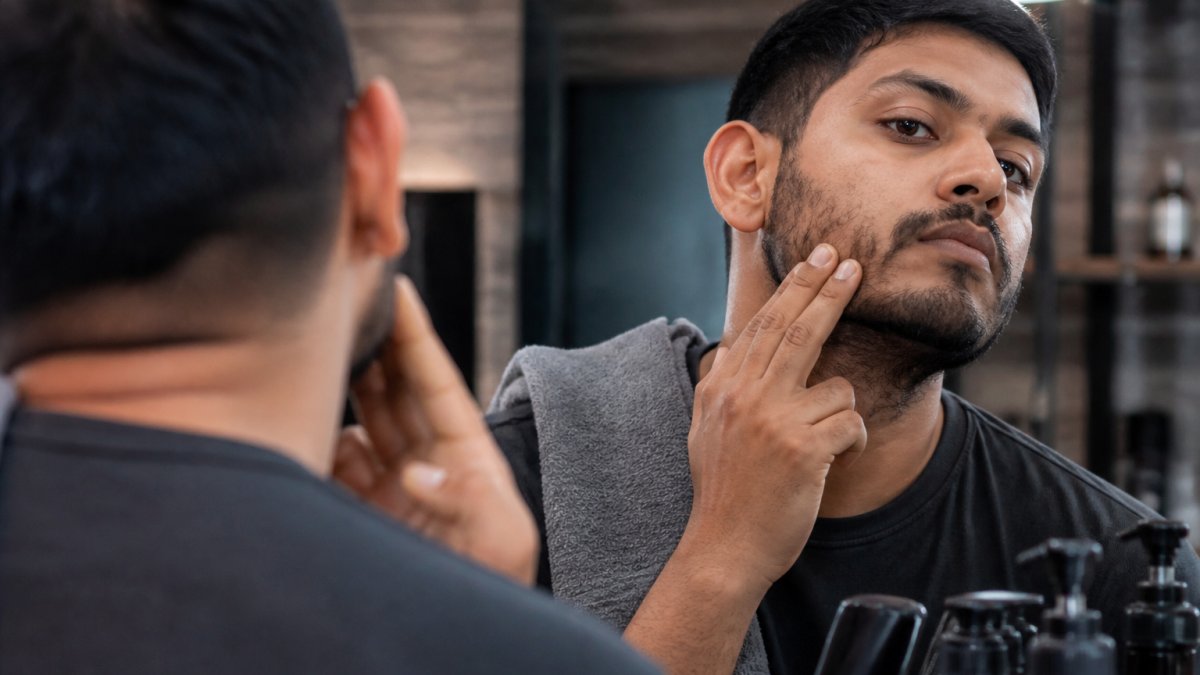
Tilt your head back and place two fingers above the Adam's apple, that is your starting point. Curve the line up toward the ears, following the jaw. Mark it once with a trimmer, then keep that shape every week; re-drawing it from scratch lets small shifts compound into an uneven edge.
Cheek Lines and Symmetry
The cheek line is where most home trims go wrong. Shave from the top down, not up, and stop at the natural growth line. Check symmetry facing the mirror straight on, then turning slightly to each side. If one cheek sits higher, correct the lower side rather than lowering the higher one.
Watch Out Trimming the neckline too high is the single most common mistake we correct in the chair. It creates a floating beard that makes the jaw look weaker, not stronger. If you are unsure, leave the line lower and let a barber set it.
The Three Month Beard Rule: What It Actually Tells You
The three month beard rule is a simple test: let your beard grow untouched for roughly three months to see your true growth pattern.
The rule does not tell you whether you can grow a beard. It tells you which styles your growth actually supports.
Three months is a long time for a professional.
Choosing a Professional Beard Style for Your Workplace
Choosing a professional beard style starts with your industry, not your mirror. A close-cropped corporate beard fits a law office, a tapered beard with a low fade fits a sales floor, and a beardstache fits a design studio. The same beard can read as sharp in one setting and sloppy in another, so match the shape to the room you walk into most often.
Industry Norms: A Practical Breakdown
Finance, law, and consulting. These environments lean toward shorter, controlled shapes. A short boxed beard or closely tapered beard with clean cheek and neck lines is safest.
Sales and client-facing roles. A tapered beard with a low fade looks polished in person and on video.
Remote and hybrid work. The camera changes the calculus.
Remote-Work Video Calls: The On-Camera Checklist
Before a call, run a quick check:
Neckline: Look at the screen, not the mirror. If the neckline looks soft or uneven on camera, tighten it slightly. The camera exaggerates shadow, so a line that looks clean in person can look blurry on video.
Cheek lines: Turn your head slightly left and right on the preview. Uneven cheek lines show up more clearly on video because the camera flattens contrast.
Length: Keep length consistent across the jaw. A beard longer on one side reads as neglected on camera even if it is unnoticeable in person.
Pro Tip Set your laptop camera to preview mode and look at your beard on screen, not in the mirror. Webcams flatten contrast, so uneven cheek lines show up more clearly on video than in person.
Patchy Growth, Sensitive Skin, and Uneven Density
Patchy growth is normal and does not disqualify you from a professional beard.
Sensitive skin needs a different approach. Trim after a shower when the hair is soft, and use a trimmer guard rather than bare blades. Beard oil and beard balm support hydration, a groomed look, and less flaking.
A Quick Decision Guide
Work through these questions in order:
How conservative is your workplace? Finance, law, and consulting point to short and controlled; creative and tech to medium or beardstache; remote and hybrid to clean edges over length.
How dense is your growth? Sparse cheeks favor shorter styles and beardstaches. Even, dense growth supports a tapered or full beard.
How much time can you spend weekly? Under ten minutes favors stubble or a short boxed beard; twenty to thirty supports a tapered beard with a fade; more time supports longer shapes.
Are you on camera most days? If yes, prioritize neckline and cheek-line maintenance over length.
That sequence produces a style you can actually maintain, the only kind that stays professional through a busy month.
Maintenance Routines for Busy Professionals
Maintenance routines for busy professionals should take minutes, not hours. Men who keep a sharp beard follow a fixed schedule and use the right tools.
Daily: comb the beard in the morning and check the neckline in the mirror.
Every few days: touch up the neckline with a trimmer.
Weekly: trim stray hairs on the cheek line and edges.
Tools matter less than consistency.
This is where a barber visit earns its place.
Best For Professionals who want a sharp beard lineup without learning to trim their own angles. A barber sets the line, and you maintain it between appointments.
A professional beard is a maintenance decision, not a one-time choice.
KOZMIC BARBERSHOP LLC handles that part for you. Our barbers bring 6+ years of experience to precision fades, sharp beard lineups, and classic straight-razor finishes, with tailored styling built around your growth pattern and workplace. Book online and let us set the line so you can maintain it with confidence.
Frequently Asked Questions
What is the most professional beard style for an office job?
The short boxed beard and the close-cropped corporate beard are the safest choices for most offices. Both keep the cheek line and neckline clean, sit at a controlled length, and look intentional rather than unkempt. A tapered beard with a low fade also works well if your workplace leans business casual. The deciding factor is upkeep: a professional beard needs trimming every two to four weeks, a defined neckline, and a combed, oiled finish. Ask your barber to set the lines once, then maintain them between visits.
What is the three month beard rule?
The three month beard rule is a simple test: stop trimming for about 12 weeks to see your full growth pattern before deciding on a style. It reveals where density is strong, where patches sit, and how long your beard can realistically go. Most men see meaningful length in that window, though growth rates vary. Use the result to pick a style that works with your natural pattern rather than fighting it. After the test, a barber can shape the beard around your jawline and face shape.
How often should I trim a professional beard?
Plan on a light trim every one to two weeks and a full shaping appointment every three to four weeks. Neckline and cheek line touch-ups matter most, since stray hairs there read as unkempt faster than length does. If you work in a conservative field or on camera regularly, keep to the shorter end of that schedule. Between appointments, a trimmer with a guard and a comb handles quick cleanups. Consistent frequency matters more than the exact interval.
Which beard style suits a round or square face shape?
For a round face, choose a style with length at the chin and tighter sides, such as a tapered beard or a goatee, to add definition. For a square jaw, a short boxed beard or stubble keeps the natural structure without overbuilding it. Oval faces carry most styles well, including the full beard and beardstache. Heart-shaped faces benefit from fuller cheeks and a trimmed chin. Bring a photo to your barber and let the neckline and cheek line do the shaping work.
Book Online
Comments